The most common coating technologies and how they compare
A comparison of eight industrial coating technologies, from dispensing and slot-die to inkjet, and how manufacturers choose the right process for functional coatings.
October 30, 2026
TLDR
Functional coatings are in nearly every manufactured product, from EV battery adhesives and e-motor insulation to protective topcoats for buildings. The application sets the requirements, and those determine which coating and deposition technology fits best.
Eight main technologies are used to apply functional coatings: dispensing, spray, slot-die, roll coating, screen printing, pad printing, foil coating and inkjet digital coating.
No method wins on every criterion. Manufacturers pick the one whose weaknesses the application can tolerate, judged on design flexibility, selective precision, coverage uniformity, throughput, material range, material waste and post-processing demand.
Functional coatings are the fundamental bedrock of manufacturing, dictating a product's functionality, cost, quality, and lifespan. Adhesives bond magnets into e-motor rotors and hold stator assemblies together under vibration and thermal cycling. Dielectric coatings insulate EV battery cells, preventing electrical breakdown. Conformal coatings protect PCBs from moisture, dust and corrosion in phones, laptops, and appliances. Protective topcoats shield furniture, window frames, and flooring from scratches, weathering, and wear.
Each of these products works because a functional layer with specific physical and mechanical properties was deposited on it. The application sets the requirements, and those requirements determine which coating or deposition technology can meet them.
This article provides an overview of functional coatings in manufacturing, looking at the types of coatings and what applications they serve best, along with the technologies used to deposit them and what parameters determine which one to use.
What are functional coatings?
Functional coatings are surface layers applied to provide specific properties beyond appearance. These layers deliver performance, bonding, insulating, conducting, protecting, rather than decoration, and are a crucial step of manufacturing in industries from automotive, electronics and healthcare to construction, architecture, and food and packaging.
Most industrial applications fall into a few families:
Conductive layers carry current or form electrodes. Silver, carbon, silver/silver chloride and silver-plated copper inks are the common materials. Typical uses include RFID antennas, flexible circuits, printed sensors, membrane switches and medical electrodes.
Insulating layers prevent current flow where it would cause failure. Acrylic, silicone, epoxy, urethane and parylene coatings, polyester and epoxy resins, and UV-curing coatings all serve this role. They protect electric motors, transformers, cables and electric-vehicle battery cells.
Dielectric layers store charge and shape electromagnetic fields rather than simply blocking current. Permittivity, not resistivity, is the governing property. Barium-titanate-filled polymers and ceramic-loaded thick-film pastes give high permittivity; polyimide, PTFE and low-loss hydrocarbon resins give low permittivity and low loss tangent at GHz frequencies. Applications include printed capacitors, crossover layers in multilayer circuits, RF antenna substrates and radomes.
Barrier layers block moisture and oxygen. Thin inorganic films, such as silicon nitride and aluminium oxide, are combined with organic polymer layers to achieve this. OLED displays, flexible electronics, thin-film solar cells and high-barrier packaging films depend on them.
Protective layers prevent corrosion, chip damage and UV damage. Automotive systems stack an electrocoat primer, a primer-surfacer, a basecoat and a clearcoat, applied to car bodies, commercial vehicles, agricultural machinery and household appliances. Conformal coatings, acrylic, silicone, urethane and parylene, do the same job on populated circuit boards, sealing against humidity, condensation and chemical attack. UV- and wear-resistant topcoats protect PVC window profiles and vinyl flooring, where the coating carries the scratch and weathering performance the substrate cannot.
Optical layers control reflection and transmission. Applications span low-emissivity architectural glass, solar-control glazing, vehicle windscreens and anti-reflective display surfaces. Structured optical layers extend the category further: microlens arrays for displays, sensors and light extraction, and metamaterial or refractive grating structures with features below the wavelength of light, which steer or diffract light by geometry rather than by bulk refractive index.
Damping layers reduce noise and vibration. Waterborne acrylic and liquid rubber are the dominant chemistries. Passenger cars, rail vehicles and domestic appliances such as dishwashers use them, often in place of bitumen pads.
Adhesives join two surfaces by filling surface roughness, curing in place, and bonding through intermolecular forces or chemical bonds with the substrate. The category spans one-component liquids (heat- or moisture-curing), two-component urethanes and epoxies, hot melts, and moisture-curing reactive hot melts. Displays, smartphones, car bodies, aircraft structures and battery packs all rely on bonded joints.
Coating technologies overview
Eight main technologies are used to apply functional coatings in industrial manufacturing. Each is described below with its strengths, limitations and post-processing demands.
Dispensing
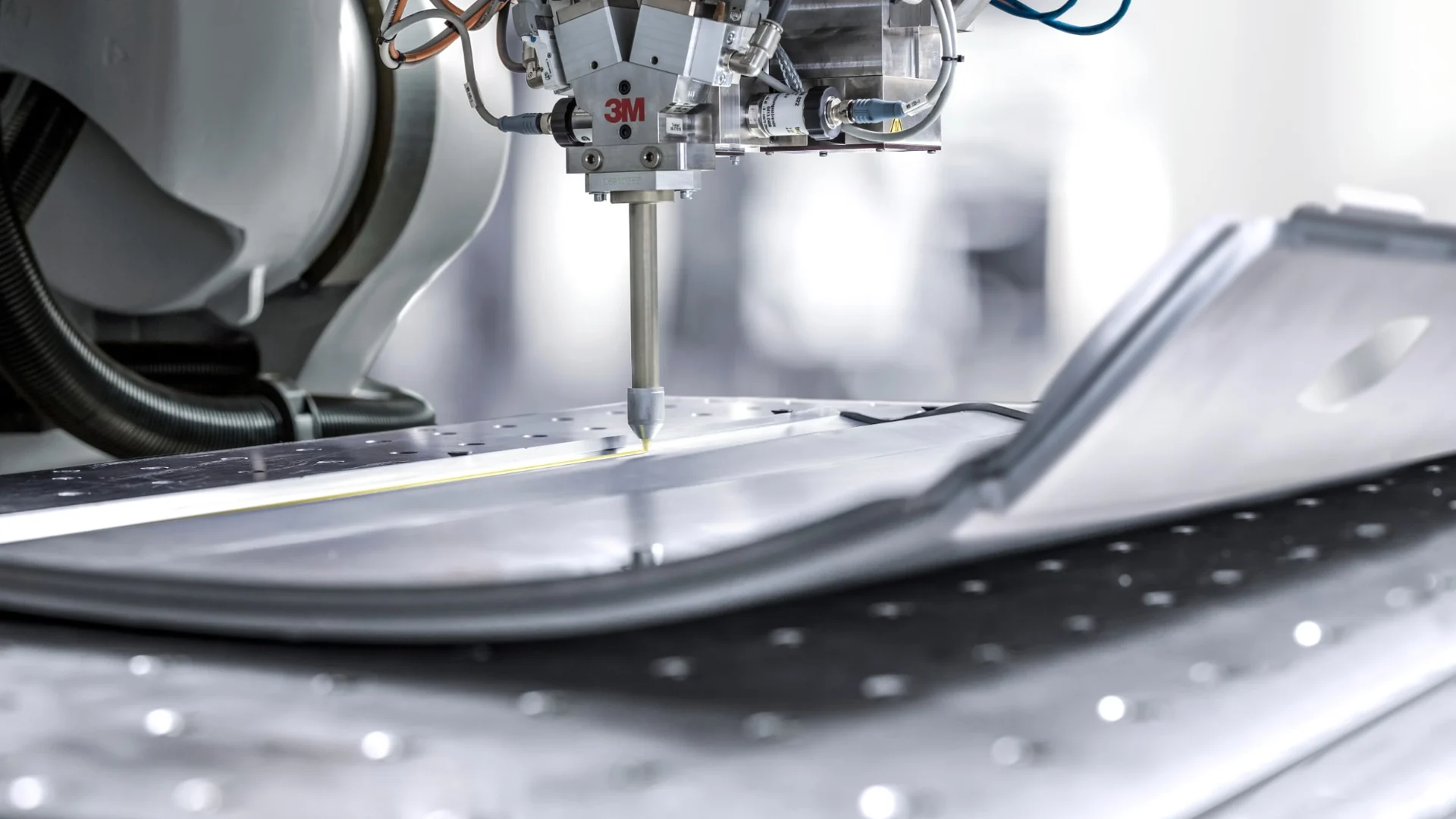
Dispensing systems deposit controlled volumes of material at defined points, using pneumatic syringes, volumetric pumps, jet valves or two-component meter-mix systems. They are the default for structural adhesives, thermal interface materials, potting and liquid gaskets.
A robotic dispensing head applies an adhesive bead at defined points on a part.
Strengths: Dispensing handles the widest material range, with progressive cavity pumps moving millions of mPa·s. It controls volume down to micro bonding scale and wastes little material. Two-component systems also handle reactive chemistries.
Limitations: Dispensing cannot cover large areas with a film, and filled materials clog nozzles. Throughput trails area-based methods. Viscosity drifts with temperature, so open-loop systems need process control.
Post-processing: Cure is a separate station and often the real bottleneck. Two-component epoxies and urethanes cure at ambient once mixed, which fixes pot life and forces the line to keep moving. One-component heat-cure adhesives need oven dwell; moisture-cure chemistries need controlled humidity and time. Thick beads cure from the outside in, so cure time scales with bead geometry rather than with deposited volume. UV-cure only works where light reaches the joint, so shadowed bondlines need a secondary mechanism, a dual-cure chemistry or a heat step.
Spray coating
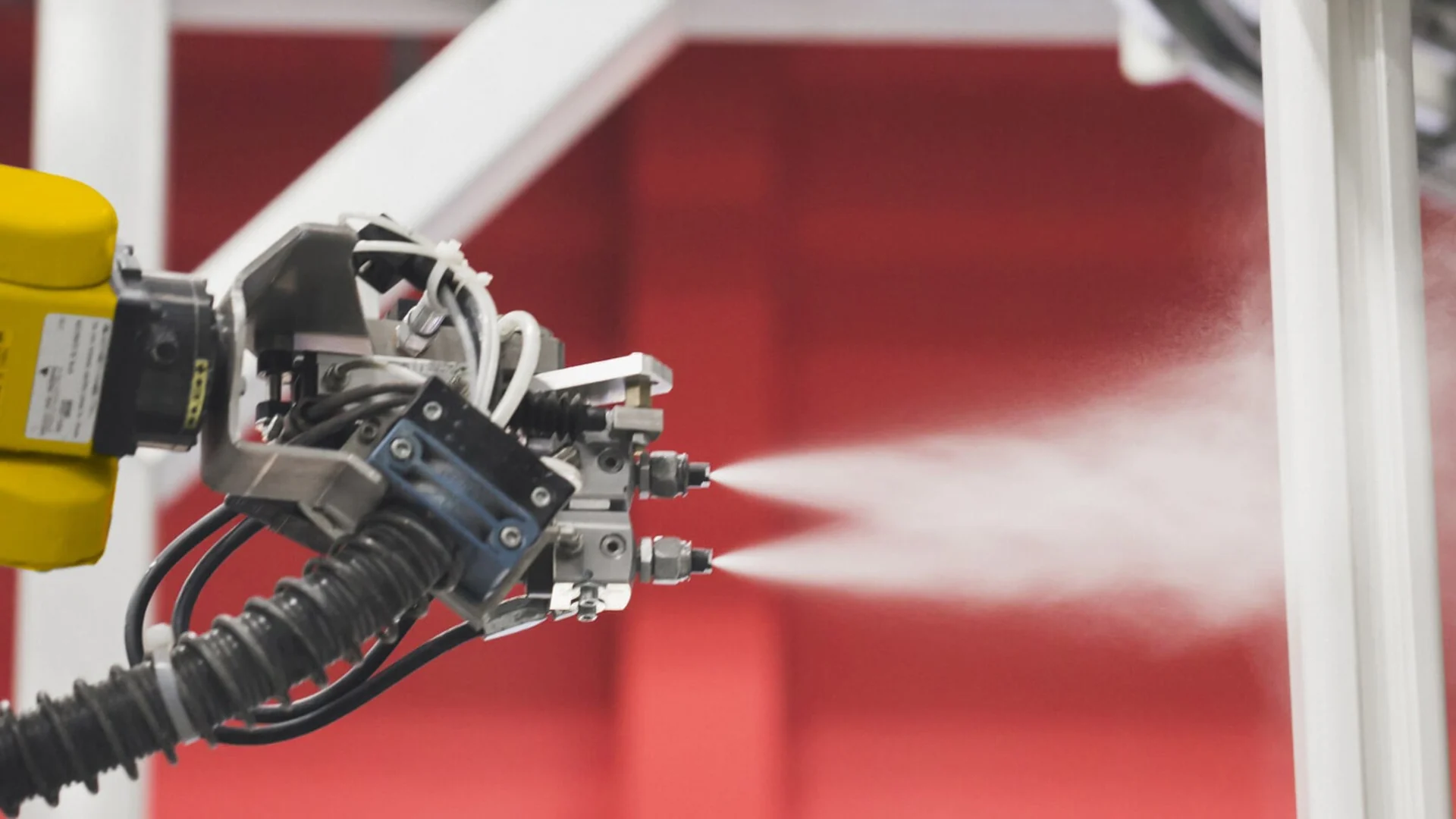
Spray coating atomises fluid into droplets by pneumatic, ultrasonic or electrostatic means. It is the workhorse for PCB conformal coatings, anti-corrosion layers and dielectric films on complex parts.
Automated spray coating reaches 3D and irregular geometries.
Strengths: Spray reaches 3D and irregular geometries and produces thin, partially even films. It automates well inline, and electrostatic variants raise transfer efficiency.
Limitations: Conventional air-atomised spray typically transfers only 25-50% of the material; the same EPA figures put electrostatic spraying at 50-95%. Selective coverage needs masking. The process is sensitive to humidity and airflow, and low-viscosity requirements exclude most filled pastes.
Post-processing: The solvent added to make the fluid atomise has to come back out. Solvent-borne coatings need a flash-off zone followed by an oven, and that drying stage sets cycle time and floor space more than the spray booth does. The same solvent load drives the VOC abatement equipment. UV-curable sprays shorten the cycle, but cure depends on line of sight, which is the one thing a complex 3D part does not offer. Masking adds a demask step after cure, with its own labour and scrap risk.
Slot-die coating
Slot-die coating extrudes fluid through a precision die onto a moving substrate. It is the mainstream method for lithium-ion electrodes, separator films and display layers.
A slot-die head extrudes a uniform wet film onto a flat substrate.
Strengths: Slot-die controls thickness to sub-micron levels over wide areas. Its enclosed, pre-metered delivery gives it among the highest material efficiency of any method. It fits directly into roll-to-roll lines.
Limitations: Slot-die needs flat, tensioned substrates and cannot pattern. Rheology must be tightly controlled. Edge effects remain a documented limit for battery performance: the wet film runs thicker at the stripe edge than at the centre, and die-geometry work is still being published on how to suppress it.
Post-processing: Drying dominates the installation. Electrode coating lines run multi-zone drying ovens tens of metres long, and on NMP-based cathode slurries a solvent recovery system is mandatory. Modelling by Argonne National Laboratory puts the energy demand of drying and NMP recovery at about 10 kWh per kilogram of solvent evaporated. Line speed is set by the drying curve, not by the die: push the web faster and binder migration, skinning and crack formation appear in the dried layer. In practice the die is the cheap part of a slot-die line.
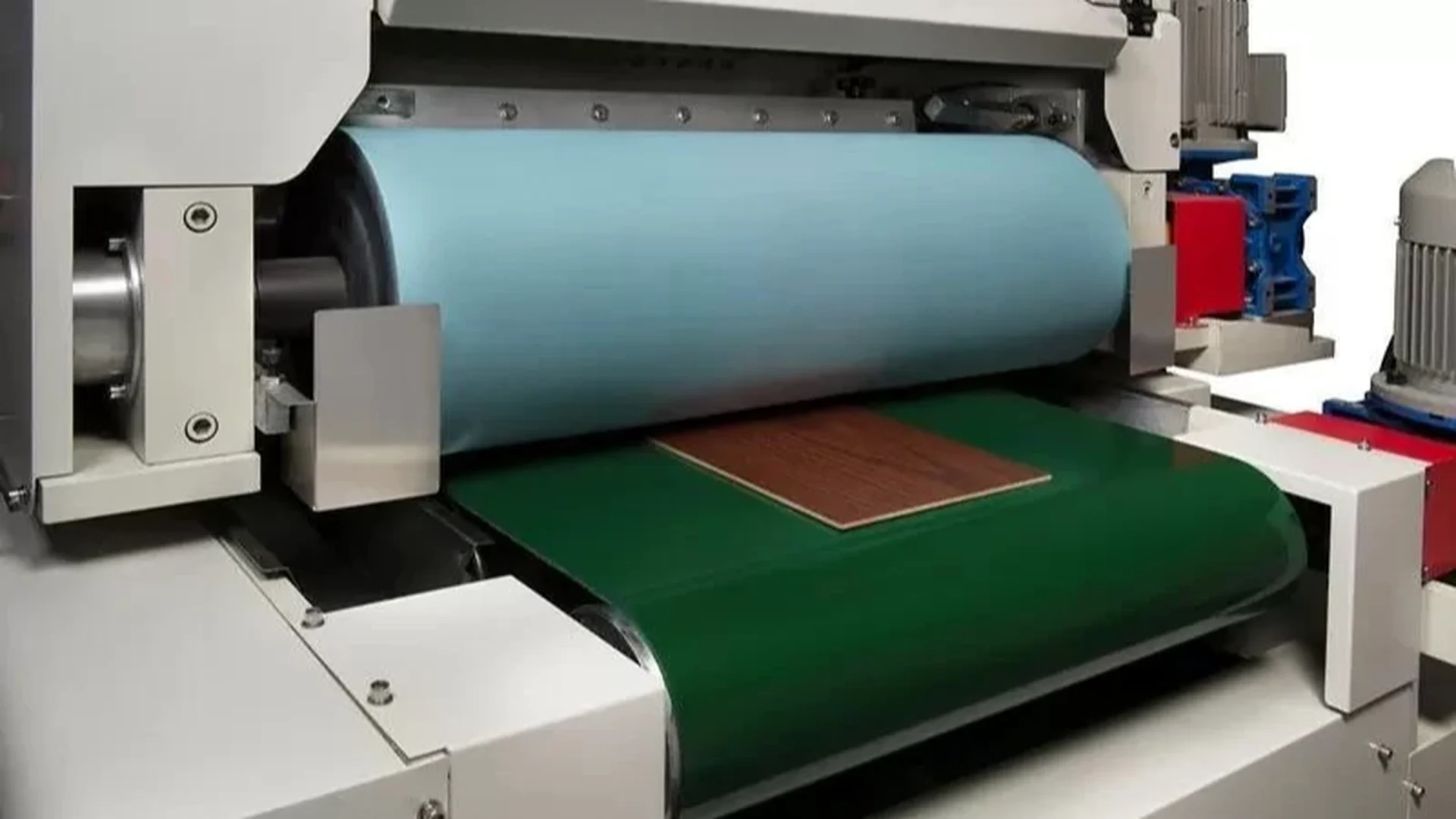
Roll coating
Roll coating transfers fluid to a moving web by gravure, reverse roll, blade or comma knife. It produces flooring wear layers, lamination adhesives and packaging barrier films.
Roll coating offers the highest throughput on flat substrates.
Strengths: Roll coating offers the highest throughput and the lowest cost per square metre on flat webs.
Limitations: Roll coating demands heavy capital and floor space. The pattern lives in the roller, so a design change means swapping hardware. It cannot coat 3D parts, and one roller defect affects a whole run.
Post-processing: Cure is designed to match web speed, which is what makes the method economic. UV-curable, 100% solids formulations cure inline in a short lamp section, standard practice for flooring wear layers, where several coats are applied and cured in sequence on one pass. Solvent-borne gravure coatings need drying tunnels instead, with the same solvent recovery burden as slot-die. Because the layer is thin and uniform, cure energy per square metre stays low.
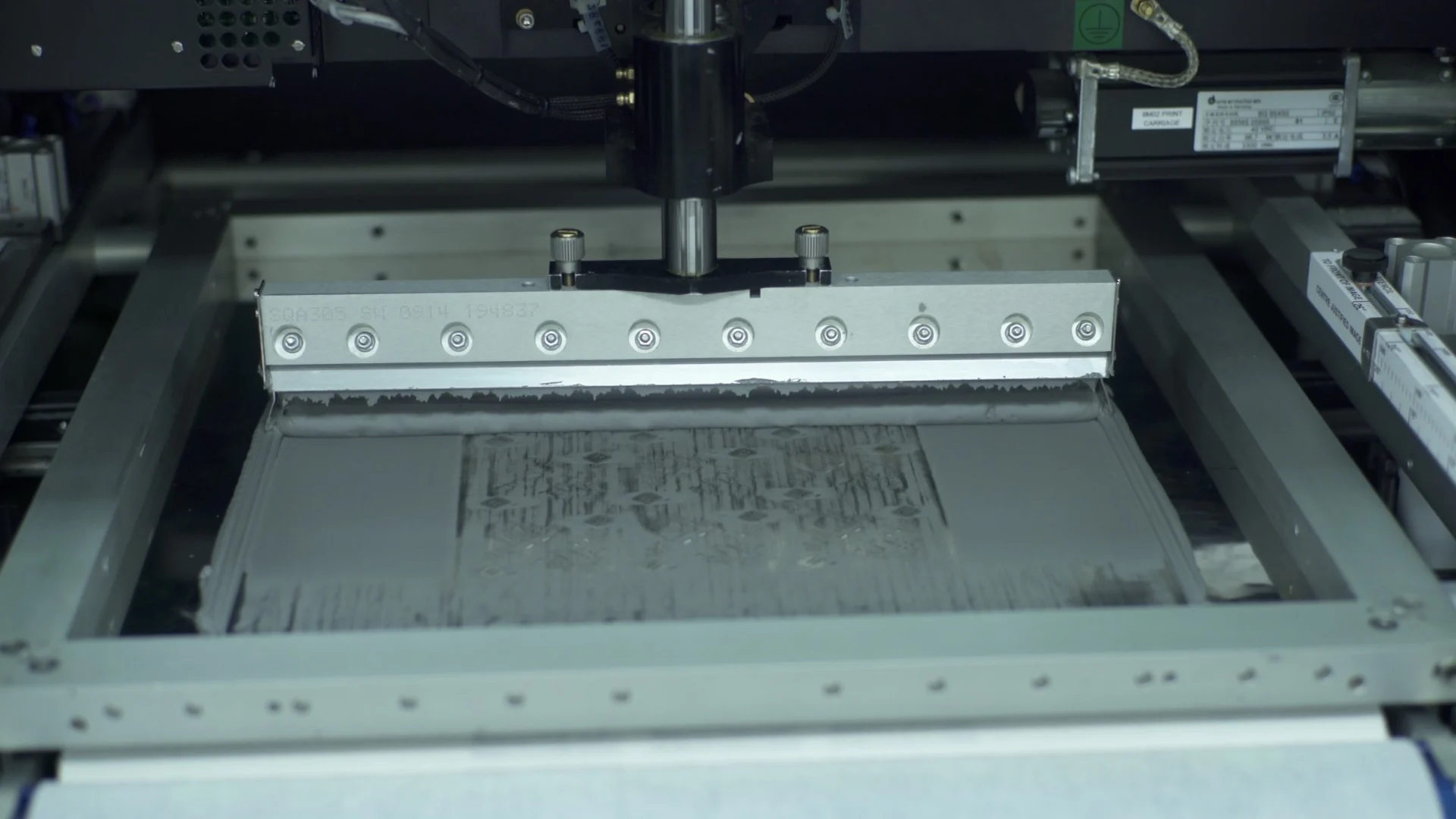
Screen printing
Screen printing pushes high-viscosity paste through a mesh stencil. It leads printing technologies in printed electronics and prints the silver contact grid on most solar cells. Fraunhofer ISE has shown 19 µm contact fingers in a single printing step, against an industry standard near 30 µm, cutting silver use by up to 30%.
A squeegee pushes high-viscosity paste through a mesh stencil.
Strengths: Screen printing patterns pastes that few methods can handle and builds thick films in one pass. It achieves the finest line resolution here at production scale and the lowest cost per part at volume.
Limitations: Screen printing makes design changes slow and expensive. Paste left on screens and cleaning cost material and labour. Substrates must be flat or nearly so.
Post-processing: Thick-film pastes are dried, then fired. Solar silver pastes run through a fast-firing furnace at a peak well above the temperature any polymer substrate could survive, which is why the method is tied to glass, ceramic and silicon. Polymer thick-film inks dry at far lower temperatures but still need enough dwell to drive solvent out of a layer many microns thick. Thickness is the governing variable: the same paste printed heavier needs a longer dwell, and under-drying leaves blistering or poor adhesion after the next layer goes down.
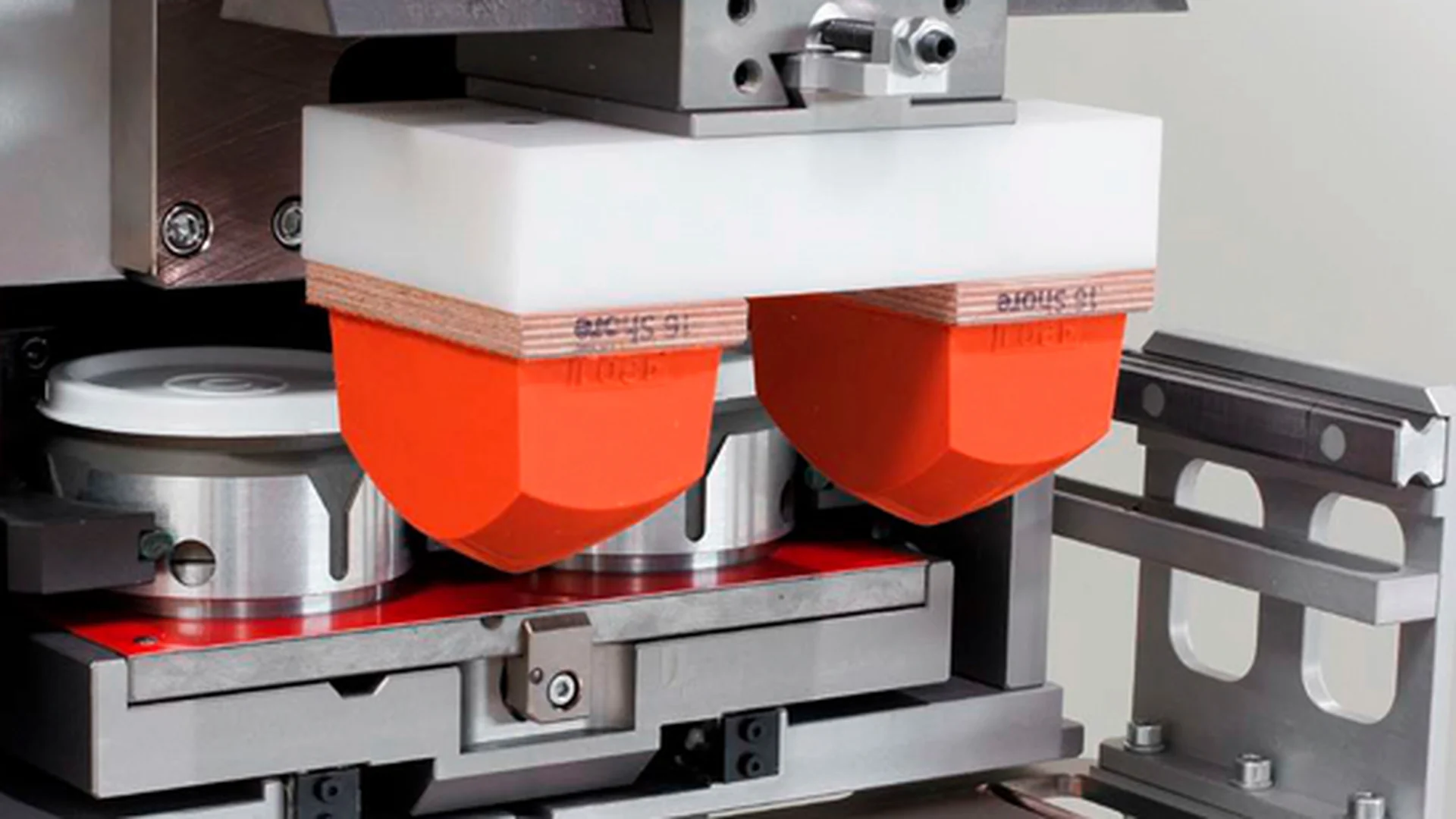
Pad printing
Pad printing transfers a 2D pattern onto a 3D part through a deformable silicone pad, such as microtext on curved medical devices or automotive switches.
Silicone pads transfer a 2D pattern onto curved and recessed surfaces.
Strengths: Pad printing conforms to curved, recessed and textured surfaces. It reproduces fine detail on plastics, metals, ceramics and glass.
Limitations: Pad printing has the lowest throughput unless parallelised. Each design needs its own cliché. Pad deformation varies thickness and limits image size, and adhesion often needs pretreatment.
Post-processing: The deposit is thin, so cure is light: solvent flash in air, a short IR tunnel, or a UV station. The demanding step sits before deposition rather than after it. Low-energy plastics need flame, plasma or corona treatment to raise surface energy, and that pretreatment has a limited shelf life, so it has to be sequenced close to the print. Multi-colour or multi-layer work needs intermediate drying between stations to stop the pad lifting wet ink.
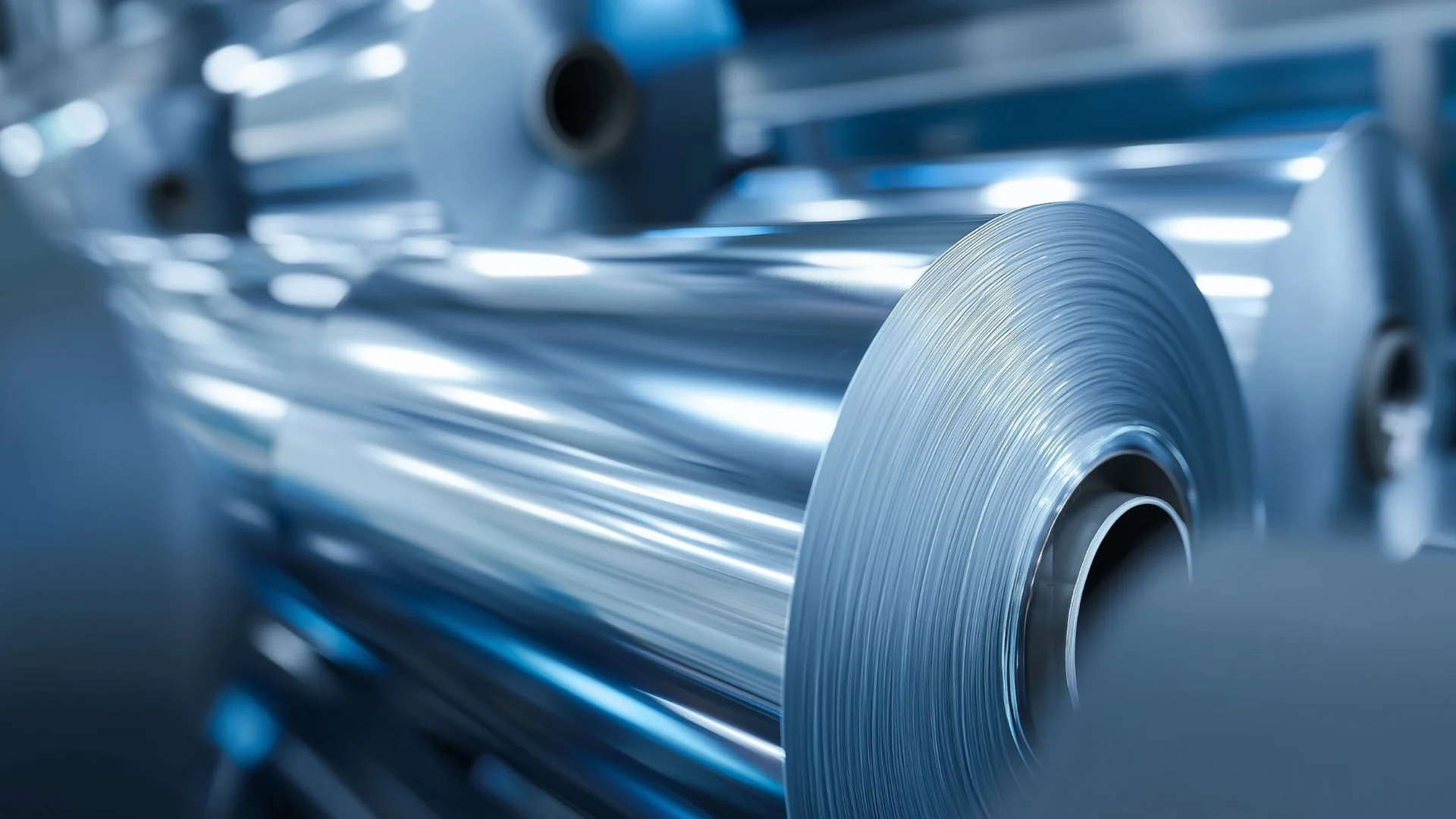
Foil coating
Foil coating applies a pre-made film by adhesion rather than depositing a liquid. It is used for barrier foils, decorative laminates and flexible substrates.
Foil coating applies a pre-made film, fixing thickness at film manufacture.
Strengths: Foil coating fixes thickness at film manufacture, giving excellent uniformity and repeatable barrier performance with no coating cure step.
Limitations: Foil coating has the narrowest material range and suits only flat or gently curved surfaces. Offcuts and changeovers create waste, and each design needs its own inventory.
Post-processing: The functional layer arrives already cured, which removes the drying oven and its energy, floor space and emissions entirely. What remains is the bond: pressure-sensitive adhesives need nip pressure and dwell only, while heat-activated and reactive laminating adhesives need a heated nip and, for some two-component systems, days of ambient post-cure before the laminate reaches full bond strength. That latency is invisible on the line but real in work-in-progress.
Inkjet digital coating
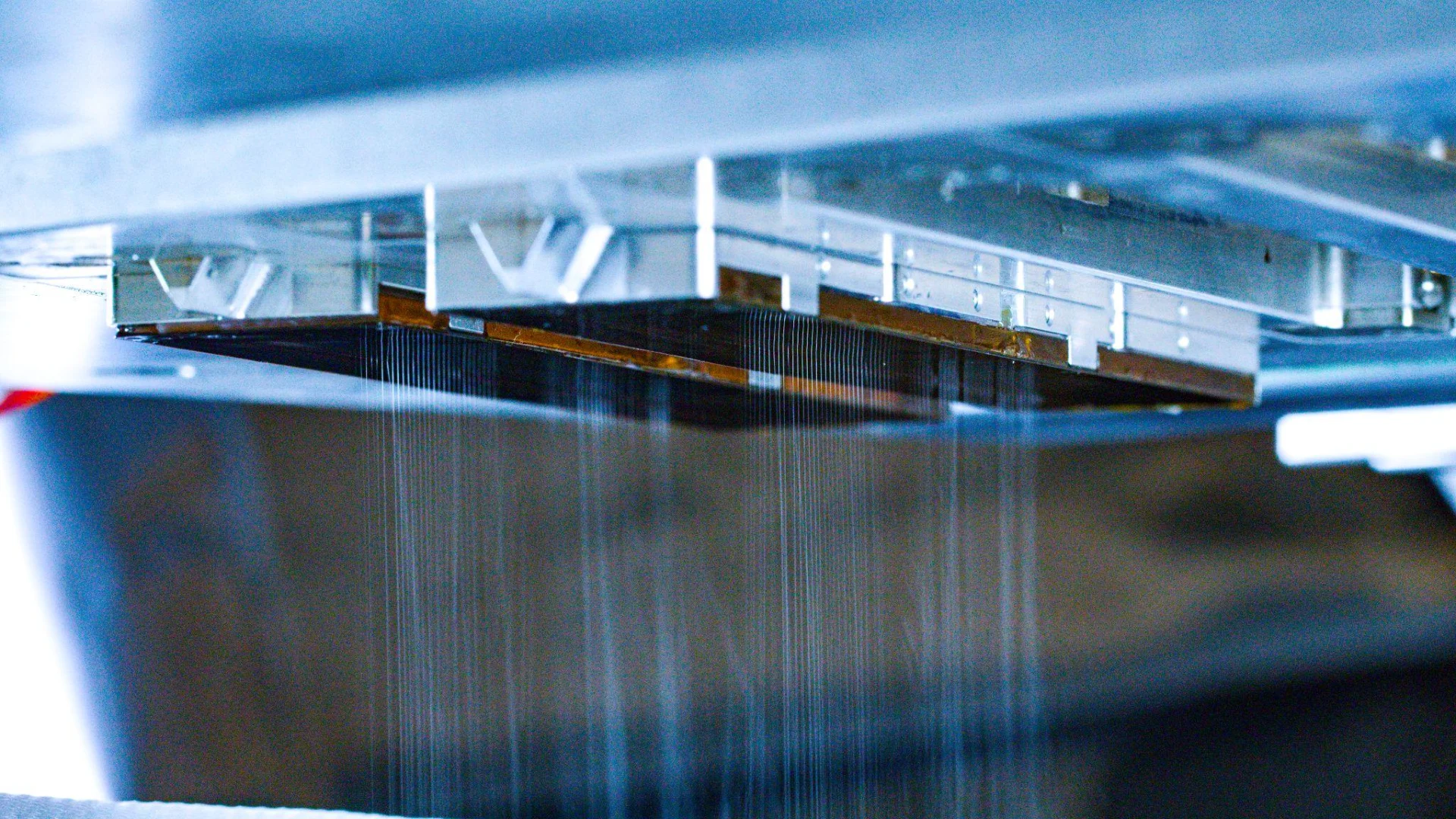
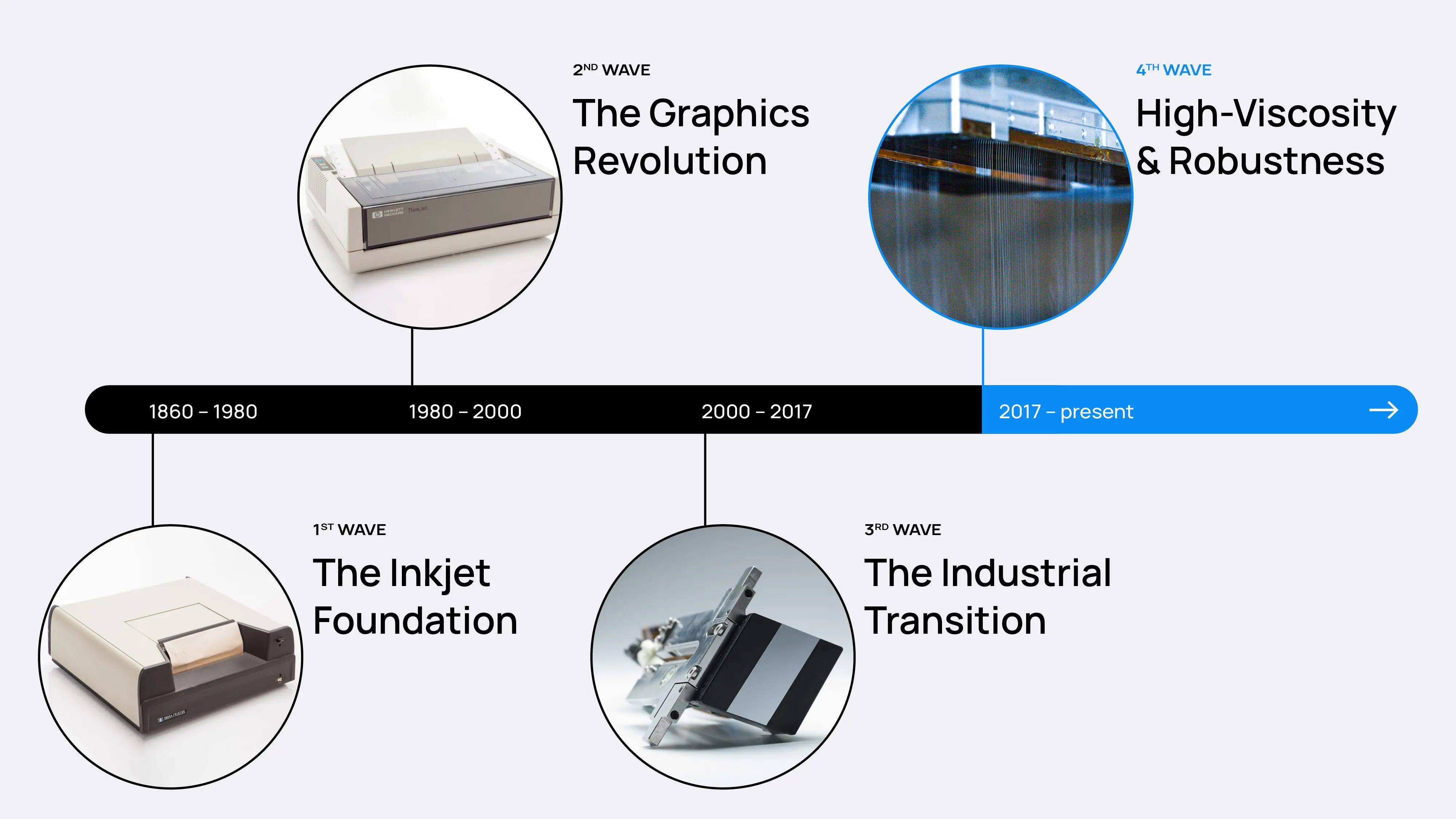
Inkjet digital coating deposits functional materials as droplets from printheads in programmable patterns defined in software. A design change means a file change, without masks, screens or tooling. Conventional inkjet printheads are typically limited to roughly 5-50 mPa·s and particle sizes below 100 nm, which kept inkjet outside the functional coatings industry. The NovoJet® printhead reaches 250 mPa·s at jetting temperature, with particle sizes up to 10 µm D99 and fill rates up to 50 wt%, enabling the deposition of adhesives, protective and insulating coatings, dielectric materials, primers, and protective topcoats.
The digital aspects of this technology, combined with a wider range of functional materials unlocked by the NovoJet® printhead, position inkjet as a candidate replacement for mechanical and semi-digital coating methods. Aiming at digitalizing production processes, Fraunhofer IPA uses Quantica's printing systems to validate adhesives, coatings and screen-printing pastes for jetting, as part of developing digital processes to replace analog material-deposition methods.
Inkjet digital coating places functional material only where the design requires it.
Strengths: Inkjet places material only where specified, removing material waste on expensive fluids and allowing complex geometry and selective coating in a fully digital way, without masking or re-tooling. By stacking multiple printheads sequentially, inkjet digital coating also suits high-speed, high-throughput applications.
Limitations: Inkjet still has the narrowest material range of the liquid methods. Film uniformity depends on droplet coalescence, and nozzle health needs strict process control.
Post-processing: Cure is integrated rather than downstream. UV-curable, 100% solids formulations are pinned or fully cured by a lamp travelling with or immediately behind the printhead, within the same pass. Pinning is also a process control: a partial cure applied milliseconds after landing arrests droplet spreading and coalescence, which is how edge definition is held on a pattern. Because a jettable formulation is brought into range by heating rather than by solvent dilution, there is less solvent to evaporate than in a sprayed or gravure-coated equivalent, though this depends on the formulation, and thermally cured materials still need an oven like any other method.
How do manufacturers choose a coating technology?
Manufacturers choose a coating method by working backwards from the application. The material sets the viscosity, particle loading and cure chemistry the process must handle. The part sets the geometry, substrate and coverage area, and the line sets throughput, changeover and cost per part. No method wins on all three, so selection means finding the one whose weaknesses the application can tolerate.
Seven main criteria decide the outcome:
Design flexibility. What it costs to change the deposited pattern. For screen, pad, roll and foil, a change means new tooling and a line stop. For dispensing and inkjet, new digital instructions.
Precision on complex patterns and selective coverage. This criterion asks whether a method can deposit material only where the design requires it, at the resolution the pattern demands. Fine lines, isolated features, varying shapes and keep-out zones around connectors, contacts or cooling channels all test it. Full-width methods such as slot-die, roll and foil coating cannot pattern at all. Spray can pattern only with masking. Screen and pad printing pattern well, but the pattern is fixed in the tooling.
Coverage uniformity. How consistent layer thickness is across the coated area, a separate question from placement, and the methods that win it are mostly the ones that cannot pattern. For dielectrics and barriers, uniformity is the specification.
Speed and throughput. Area covered per unit time at production line speed, not in the lab.
Material range. Viscosity, particle loading and cure chemistry. A filled paste will not atomise; a fast-curing 2K adhesive will gel in the wrong delivery system. This criterion vetoes methods that looked ideal on every other axis.
Material waste. What fraction of the fluid reaches the part. With silver pastes or specialty adhesives, transfer efficiency drives cost per part more than cycle time does. It is also a sustainability criterion: material that misses becomes overspray capture, solvent emissions and disposal volume, carrying a VOC and waste-handling burden that shows up in permits and abatement equipment.
Post-processing and curing. What has to happen after deposition before the part can move on, and what that step costs in time, energy, floor space and emissions. Three things decide it. First, how much solvent the deposition method required: anything added to make a fluid atomise or flow has to be evaporated, captured and often abated. Second, whether cure can happen inline at line speed or needs a separate oven, furnace or ambient dwell. A two-component adhesive curing over hours becomes work-in-progress inventory, not cycle time. Third, whether the cure mechanism matches the part: UV needs line of sight, high-temperature firing rules out polymer substrates, and thick deposits cure from the outside in. The deposition head is frequently the smallest part of the installation; the drying or curing section is where the capital, the energy and the footprint go.
Conclusion
Functional coatings are not a single problem with a single answer. A dielectric film on a battery separator and a structural adhesive bead in an e-motor rotor are both deposited layers, but nothing about the two processes is shared: not the viscosity, not the coverage pattern, not the cure.
The seven criteria sort the field more sharply than any ranking does. Uniformity and selectivity pull in opposite directions: the methods that coat a web to sub-micron tolerance, slot-die, roll and foil, are precisely the ones that cannot pattern, and the methods that pattern well either fix that pattern in tooling or trade away area throughput. Material range vetoes more candidates than any other criterion, and it does so first: a filled paste will not atomise, and no amount of strength elsewhere recovers that. Post-processing then decides what the installation actually costs, because the deposition head is rarely the expensive part. A slot-die line is mostly drying oven. A spray booth is mostly abatement.
Two shifts are changing where the lines fall. Material efficiency has moved from a cost line to a compliance line, as VOC limits and waste handling turn overspray into permits and equipment rather than just lost fluid. And the viscosity ceiling on inkjet has risen, which puts a digital, selective, pre-metered method into territory that previously belonged to dispensing and screen printing. How far that extends is still being established: material range remains inkjet's binding constraint, and qualification cycles in automotive and battery production are measured in years, not quarters.
What stays constant is the method of choosing. Start from the material and the part, work out which criteria the application cannot compromise on, and accept the weaknesses that come with whatever is left.
Further from the centre is stronger (1 weak to 5 strong). Select one method, several, or all to compare.
Quantica's H2: Gearing Up for a Busy Second Half of 2025
From application development in e-motors and fuel cells to international conferences and events in H1, the Quantica team is preparing for an exciting second half of the year.
By clicking “Accept All Cookies”, you agree to the storing of cookies on your device to enhance site navigation, analyze site usage, and assist in our marketing efforts. View our Privacy Policy for more information.